Middle East Shipping Update July 2026: Hormuz at 32%, Red Sea Still Rerouted.

Strait of Hormuz transits are running at 32% of pre-crisis volume and Cape routing remains the Asia–Europe default. Here is the July 2026 cost stack, lane impact, and mitigation playbook for China-origin cargo.

SZViper Operations Desk
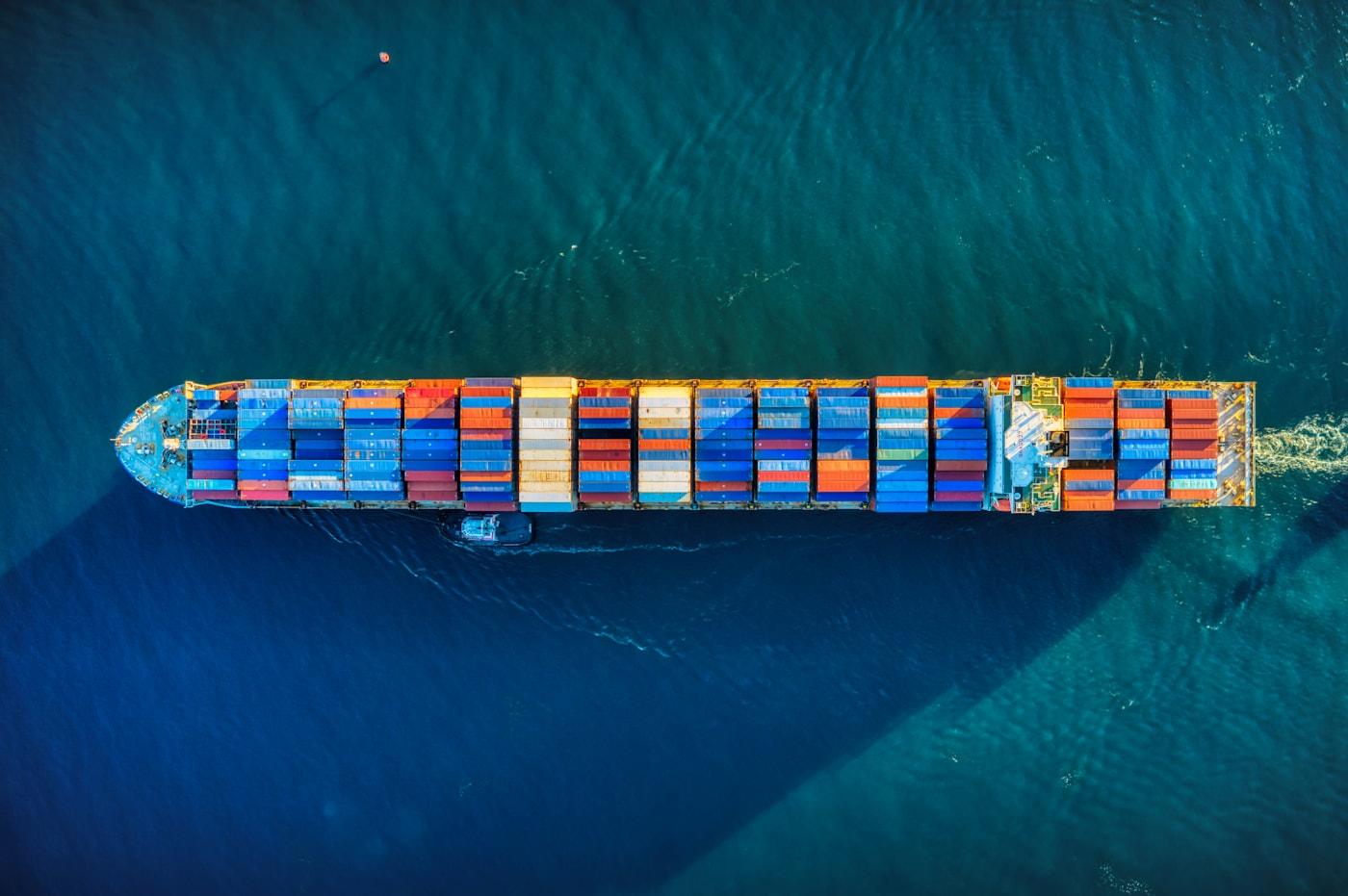
Large cargo ship sailing alone in open ocean, illustrating long-haul Cape of Good Hope diversions during the 2026 Middle East shipping crisis
01 / INDUSTRY NEWS
Key takeaways.
  • 01Strait of Hormuz commercial transits reached 32% of pre-crisis volume by 28 June — 27 vessels per day against a typical 84 (IMF PortWatch) — but two tankers were struck by projectiles on 7 July, so the recovery remains fragile.
  • 02War-risk insurance peaked near 4% of hull value per seven-day transit against roughly 0.125% pre-crisis; carriers are applying War Risk Surcharges up to $1,500 per TEU plus Emergency Conflict Surcharges of $2,000–4,000 per container on Gulf-linked lanes.
  • 03Suez Canal transits are still roughly 60% below pre-diversion levels; the Cape of Good Hope remains the default Asia–Europe routing, adding 3,500–4,000 nautical miles and 10–14 days per voyage.
  • 04Chinese-flag and China-linked vessels are among those permitted continued transit through Hormuz, keeping China–Gulf trade moving while many other flags wait — and China–Europe Railway Express capacity is absorbing time-critical cargo.
  • 05Plan Q3 bookings on Cape-routed schedules and lock space 4–6 weeks ahead: industry consensus now expects Red Sea diversions to persist through at least 2027.

State of play: a fragile de-escalation in the Gulf

Commercial shipping through the Strait of Hormuz has been severely constrained since hostilities in the region began on 28 February 2026. At the low point in early March, tanker traffic in the strait effectively ceased, and by late April the International Maritime Organization counted roughly 2,000 ships and 20,000 mariners held up inside the Persian Gulf.

A memorandum signed on 17 June was intended to end the blockade, and the Joint Maritime Information Center downgraded its Hormuz threat assessment from critical to severe on 7 June after a run of safe transits along the southern corridor near the Omani coast. The recovery is real but uneven: IMF PortWatch data shows 27 vessels transiting on 28 June — about 32% of the typical 84 per day — while on 7 July two tankers were struck by projectiles inside the strait, including an LNG carrier that suffered an engine-room fire. Residual sea mines remain a live constraint, with clearance operations ongoing since April.
Red Sea: Cape of Good Hope is still the default

The Hormuz crisis landed on top of a Red Sea corridor that never normalised. Suez Canal transits in the first half of 2026 ran roughly 60% below pre-diversion levels, and the major container lines — Maersk, CMA CGM, Hapag-Lloyd among them — continue to route Asia–Europe and Asia–US East Coast strings around the Cape of Good Hope as the default.

Carriers that do transit Suez are doing so selectively: premium or time-critical services take the canal when the risk picture allows, while cost-oriented loops stay on Cape routing with contingency plans for rapid re-diversion. Analyst consensus, including Xeneta's mid-year assessment, is that a large-scale return to the Red Sea will not happen in 2026 and that diversions persist through at least 2027. For China–Europe ocean freight, that means the 3,500–4,000 additional nautical miles and 10–14 extra days of Cape routing are a planning baseline, not a temporary surcharge line.

The cost stack: insurance, surcharges and bunker exposure

The insurance market has driven most of the cost escalation. Pre-crisis war-risk premiums for a Hormuz transit sat near 0.125% of hull value; at the peak of the crisis quotes reached approximately 4% per seven-day transit — a multiple of more than 30 — and several P&I clubs withdrew cover outright in early March. A US-backed reinsurance facility of up to $40 billion, arranged through the Development Finance Corporation with commercial insurers, has since put a floor under the market, and premiums have eased from their peak as southern-corridor transits accumulate.

On the freight side, carriers are applying War Risk Surcharges of up to $1,500 per TEU on Gulf-linked lanes, plus a new Emergency Conflict Surcharge category running $2,000–4,000 per container on affected trades. Bunker exposure compounds the stack: Brent crossed $100 per barrel on 8 March for the first time in four years and peaked at $126, feeding through to bunker adjustment factors on every long-haul string — particularly Cape-routed loops burning fuel over the extra 3,500–4,000 nautical miles.

What it means for China-origin cargo

China-linked shipping holds a comparatively strong position in this environment. Chinese-flag and China-associated vessels are among those permitted continued transit through Hormuz — alongside Indian, Turkish and Malaysian tonnage — which has kept China–Gulf trade flows moving while much of the global fleet waited out the closure. For shippers moving China-origin cargo into the GCC, services are increasingly structured around transhipment at hubs outside the strait, notably Salalah and Duqm in Oman, with final-leg delivery timed to transit windows.

On China–Europe, the crisis has reinforced the value of routing diversity. China–Europe Railway Express services via the trans-Kazakhstan corridor are absorbing time-critical and high-value cargo at 15–20 day transit times — roughly half the Cape-routed ocean transit of 40–50 days from South China base ports — and Chinese export volumes have remained resilient through the first half, with manufacturers and forwarders adapting routings faster than in the 2024 Red Sea shock. Shenzhen, Ningbo and Shanghai port operations are unaffected; the constraint sits entirely on the destination-lane side.

What shippers should do now

  • 01Build Cape routing into Q3–Q4 lead times as the baseline: quote 40–50 days port-to-port China–North Europe and book space 4–6 weeks ahead of cargo-ready dates.
  • 02Audit every Gulf-lane quote for the surcharge stack — WRS up to $1,500 per TEU plus ECS of $2,000–4,000 per container — and get validity periods in writing; surcharges are repricing week to week.
  • 03For GCC-bound cargo, price transhipment via Salalah or Duqm against direct Hormuz-transit services: transhipment adds 5–8 days but strips most of the war-risk premium off the main leg.
  • 04Shift time-critical China–Europe cargo to rail: 15–20 days via the China–Europe Railway Express, with LCL consolidation available for shipments under a full container.
  • 05Split high-value flows across ocean and rail rather than gambling a full consignment on one corridor — a 70/30 ocean/rail split caps downside if either lane reprices suddenly.

Looking ahead: watch the transit count, not the headlines

The single most useful indicator for the next quarter is the daily Hormuz transit count against the 84-vessel pre-crisis baseline. A sustained climb through 50% with no fresh incidents would pull war-risk premiums down quickly and restore direct Gulf services; renewed strikes like those on 7 July reset the clock. On the Red Sea, no major carrier has committed to a 2026 return, so Asia–Europe capacity and schedules remain Cape-shaped into 2027 — softening rates gradually as new tonnage absorbs the longer rotations, but keeping transit times long.

SZViper is quoting China–EU and China–Gulf movements daily across ocean, rail and transhipment options. If your Q3 shipping plan still assumes pre-crisis transit times or surcharge levels, rework it now — the cheapest mitigation is the one booked before the next repricing cycle.

Frequently asked questions.

Q01
Is the Strait of Hormuz open for shipping in July 2026?

Partially. Transits are running at roughly 32% of pre-crisis volume — 27 vessels per day against a typical 84 as of 28 June (IMF PortWatch) — mostly along a southern corridor near the Omani coast. Attacks have not fully stopped: two tankers were struck by projectiles on 7 July, and residual mine clearance is ongoing.

Q02
How much longer does shipping from China to Europe take because of the Red Sea diversions?

Cape of Good Hope routing adds 3,500–4,000 nautical miles and 10–14 days per voyage versus the Suez route. Plan on 40–50 days port-to-port from South China base ports to North Europe, and book space 4–6 weeks ahead of cargo-ready dates.

Q03
Is rail or ocean better for China–Europe freight during the crisis?

Rail wins on time, ocean wins on cost. The China–Europe Railway Express delivers in 15–20 days — roughly half the Cape-routed ocean transit — at a higher per-CBM rate. Most shippers split flows: time-critical and high-value cargo on rail, volume cargo on Cape-routed ocean.

Q04
What surcharges apply to Middle East and Gulf shipments right now?

Carriers are applying War Risk Surcharges up to $1,500 per TEU on Gulf-linked lanes, plus Emergency Conflict Surcharges of $2,000–4,000 per container on affected trades. War-risk hull insurance peaked near 4% of vessel value per seven-day transit against about 0.125% pre-crisis, and those costs pass through to freight.

Q05
When will container lines return to the Suez Canal?

Not in 2026, on current consensus. Suez transits remain roughly 60% below pre-diversion levels, carriers are only running selective transits for premium services, and analysts including Xeneta expect large-scale diversions to persist through at least 2027. Treat Cape routing as the planning baseline into next year.

  • [01]IMF PortWatch — Strait of Hormuz daily transit calls, 28 June 2026
  • [02]Joint Maritime Information Center (JMIC) — Hormuz threat assessment, 7 June 2026
  • [03]Xeneta — mid-year assessment, Red Sea return scenarios for container shipping, 2026
  • [04]International Maritime Organization — vessels and mariners held in the Persian Gulf, April 2026
  • [05]Drewry World Container Index (WCI) — Asia–Europe components, July 2026
SZViper Operations Desk

SZViper's operations team handles daily export clearance, carrier relationships, and destination delivery across seven warehouses on three continents.

Need rates for the lane in this article?.

Tell us your origin, destination, and volume — we come back with a real number within one business hour.

Get rates