Shipping Market Update October 2026: Hormuz Shuts Again, Suez Passes 50%, Asia–Europe Rates Turn.

The Strait of Hormuz is effectively closed again after the summer ceasefire collapsed, while Suez Canal container traffic has climbed past half of pre-crisis levels for the first time. Here is what mid-October rates, carrier FAK hikes and Q4 capacity mean for China-origin cargo.

SZViper Operations Desk
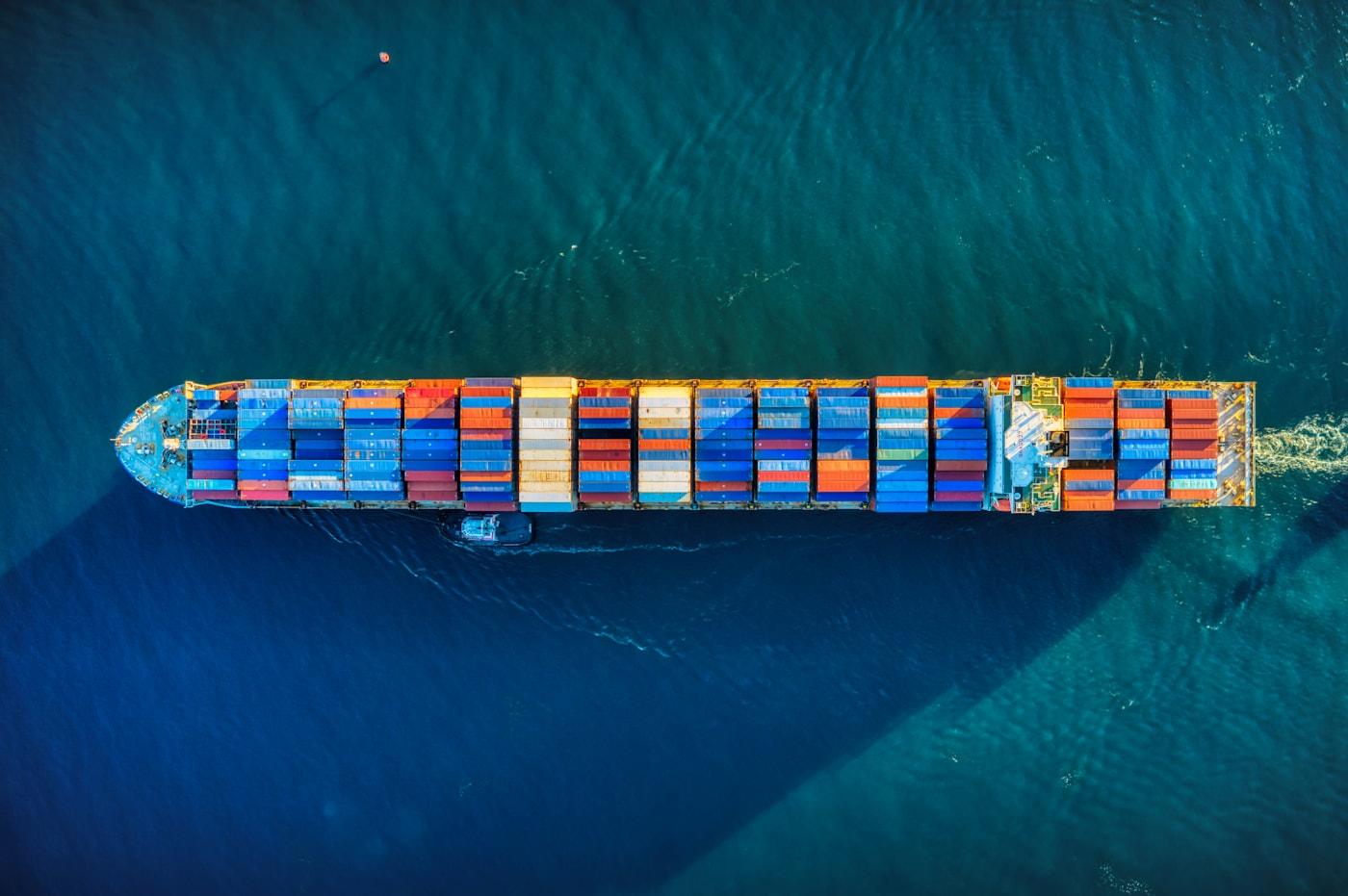
Large container ship sailing on open ocean, illustrating shifting Asia–Europe and Gulf routings in October 2026
№ 01 / INDUSTRY NEWS
Key takeaways.
  • 01The June US–Iran memorandum did not hold: the ceasefire broke down over shipping on 7–8 July, a tanker war has run since September, and IMF PortWatch logged just 2 Hormuz transits on 11 October against a normal of about 85 per day.
  • 02Two cargo ships were sunk near the strait in mid-October and oil flows through Hormuz averaged 8.5 million barrels per day in the week to 12 October — nearly 40% below pre-war levels (Kpler).
  • 03In the opposite direction, Suez Canal container capacity averaged 753,000 TEU per week in the first half of October (Clarksons via BIMCO) — the first time above 50% of pre-crisis levels — and Linerlytica expects a full Suez return by Q1 2027.
  • 04Drewry's World Container Index rose 3% to $4,485 per FEU on 15 October, its first Asia–Europe-led gain after a three-month slide; Shanghai–Rotterdam is up 6% to $3,522 as carriers push second-half-October FAK increases.
  • 05Transpacific rates appear to have peaked: Shanghai–Los Angeles sits at $7,884 per FEU, and Xeneta's three-month outlook points to a sizeable correction rather than a collapse.

Hormuz: the summer recovery has reversed

When we last reported in July, Hormuz transits had recovered to roughly a third of normal and the threat picture was easing. That recovery did not last. The 17 June memorandum between the US and Iran set up a 60-day ceasefire and a framework for reopening the strait, but it broke down over attacks on commercial shipping on 7–8 July. The US reinstated its blockade of Iranian ports in mid-July, Iran declared the strait closed again, and since September a tanker war has kept traffic at a fraction of pre-war levels.

October has been the worst month since the spring. IMF PortWatch recorded only 2 transits on 11 October against a typical 85 per day, at least ten vessels have been struck in and around the strait since then, and two cargo ships — including the GFS Pride — sank after projectile strikes in separate incidents in mid-October. Kpler puts oil exports through the strait at an average of 8.5 million barrels per day in the week ended 12 October, nearly 40% below normal. On 4 October Tehran said the strait would remain closed until Washington meets its conditions; US Central Command disputes that Iran controls the waterway, and diplomatic efforts are stalled. Treat direct Hormuz container service as unavailable for planning purposes.
Suez: carriers are coming back faster than expected

The Red Sea is moving the other way. According to Clarksons Research data published by BIMCO, container ship capacity transiting the Suez Canal averaged 753,000 TEU per week in the first two weeks of October, against 1,457,000 TEU in the same period of 2023 — the first time transits have exceeded 50% of pre-disruption levels since the Houthi attacks began. Clarksons estimates 36% of the container capacity choosing between Suez and the Cape of Good Hope took the canal in early October, up from around 8% between 2024 and mid-2026. Lloyd's List counted 314 container transits in September, up 64% year on year and the highest since the crisis started.

This is a meaningful change to the outlook we gave in July, when consensus expected Cape routing to persist through 2027. Linerlytica now expects a full-scale return to Suez by the first quarter of 2027. The return is uneven, though: several Asian carriers had not resumed Red Sea routings as of late September, Houthi attacks on shipping continue around Yemen and Saudi Arabia, and war-risk insurance for Bab el-Mandeb remains elevated. For China–Europe ocean freight, that means transit times now depend on which string you book — Suez-routed services can be 10–14 days faster than Cape loops on the same lane.

Rates: Asia–Europe turns, transpacific tops out

Drewry's World Container Index rose 3% to $4,485 per 40ft container on 15 October, after a 2% Golden Week dip to $4,351 on 8 October. The gain was led by Asia–Europe: Shanghai–Rotterdam rose 6% to $3,522 and Shanghai–Genoa 7% to $3,945. That reverses a slide that began in early July — Xeneta had Far East–North Europe at $3,645 per FEU on 7 October and still trending down. The trigger is carrier pricing: Hapag-Lloyd's new FAK rates from 19 October set $4,200 per FEU to North Europe and $4,600 to the West Mediterranean, and CMA CGM has filed Asia–Mediterranean FAKs of $4,600–4,900 for 19–31 October. Demand remains subdued, so how much of those increases sticks into November is an open question.

On the transpacific, Shanghai–Los Angeles edged up 3% to $7,884 per FEU and Shanghai–New York slipped 1% to $10,075. Strong US import demand is still supporting levels well above the Asia–Europe lane, but Xeneta's chief analyst believes Far East–US spot rates reached their post-Hormuz peak in early October; its three-month outlook calls for US East Coast rates of $6,000–7,000 and West Coast rates of $4,500–5,500 per FEU — a sizeable correction, not a collapse. Carriers are managing capacity actively: Drewry's cancelled sailings tracker counts 34 blank sailings out of 713 scheduled across weeks 42–46, with the transpacific eastbound trade accounting for nearly half.

What it means for China-origin cargo

For China–Europe, the picture is improving on time and holding steady on cost. More Suez-routed capacity is shortening transits on selected strings, and the October FAK push is lifting rates from a low base rather than from a peak. Shippers who held off booking through the September slide should expect quotes to step up for late-October and early-November sailings, then likely soften again if demand stays flat after the Golden Week restart. China–Europe Railway Express remains the time-critical alternative at 15–20 days.

For China–Gulf, the closure is now the base case. Cargo for Jebel Ali and the wider GCC is moving via ports outside the strait — Fujairah and Khor Fakkan on the UAE east coast, and Salalah and Duqm in Oman — with overland or feeder final legs, and surcharge stacks remain heavy. Bookings into Iraq, Kuwait, Qatar, Bahrain and Saudi Gulf ports face the tightest restrictions. For China–US, the lane is past its peak but still expensive; if you have flexible cargo, a few weeks of patience into November is likely to be rewarded. Shenzhen, Ningbo and Shanghai port operations are unaffected throughout.

What shippers should do now

  • 01China–Europe: ask your forwarder which strings are Suez-routed versus Cape-routed and price both — the time difference can be 10–14 days for a similar rate.
  • 02Lock late-October Asia–Europe space against the current FAK levels (around $4,200 per FEU to North Europe) rather than waiting for a further slide; the downtrend has paused for now.
  • 03China–Gulf: plan on Fujairah, Khor Fakkan, Salalah or Duqm with an overland or feeder final leg, and get every surcharge line and its validity period in writing.
  • 04China–US: if cargo can wait, stage November bookings rather than paying the October peak — analysts expect West Coast rates to correct towards $4,500–5,500 per FEU.
  • 05Use the 2027 tender season: build index-linked clauses tied to WCI or SCFI, and separate Suez and Cape transit assumptions in contract service levels.

Looking ahead

Three indicators matter most for the next quarter. First, the daily Hormuz transit count: any credible reopening would release trapped tonnage and pull Gulf surcharges down quickly, but there is no sign of one yet. Second, the Suez share of Asia–Europe capacity: if it keeps climbing towards pre-crisis levels, the effective capacity freed up by shorter rotations will put renewed downward pressure on Asia–Europe rates into 2027, overwhelming this month's FAK increases. Third, carrier blank sailings after Golden Week, which will tell us how hard lines intend to defend transpacific pricing.

SZViper is quoting China–EU, China–US and China–Gulf movements daily across Suez- and Cape-routed ocean services, rail and Gulf transhipment options. If your Q4 plan was built on July assumptions, it is worth a second look now — the routing map has changed in both directions.

Frequently asked questions.

Q01
Is the Strait of Hormuz open in October 2026?

Effectively no, for commercial container shipping. The June ceasefire collapsed in early July, a tanker war has run since September, and IMF PortWatch recorded only 2 transits on 11 October against a normal of about 85 per day. Two cargo ships were sunk near the strait in mid-October. Gulf-bound cargo is moving via Fujairah, Khor Fakkan, Salalah and Duqm instead.

Q02
Are container ships using the Suez Canal again?

Increasingly, yes. Container capacity transiting Suez averaged 753,000 TEU per week in the first half of October, above 50% of pre-crisis levels for the first time, and roughly 36% of capacity choosing between Suez and the Cape now takes the canal. Linerlytica expects a full return by Q1 2027, though not every carrier has resumed and Houthi attacks continue.

Q03
What are China–Europe container rates in October 2026?

Drewry's WCI put Shanghai–Rotterdam at $3,522 per 40ft container and Shanghai–Genoa at $3,945 on 15 October, up 6–7% on the week after a three-month decline. Carriers including Hapag-Lloyd and CMA CGM have filed FAK rates of around $4,200–4,900 per FEU for second-half-October sailings.

Q04
Have China–US shipping rates peaked?

Most likely. Shanghai–Los Angeles was $7,884 per FEU and Shanghai–New York $10,075 on 15 October. Xeneta believes Far East–US spot rates peaked in early October and expects East Coast rates of $6,000–7,000 and West Coast rates of $4,500–5,500 per FEU over the next three months.

Q05
How long does shipping from China to Europe take right now?

It depends on the routing. Cape-routed services still take roughly 40–50 days port-to-port from South China to North Europe, while Suez-routed strings can save 10–14 days. China–Europe Railway Express runs 15–20 days for time-critical cargo.

SZViper Operations Desk

SZViper's operations team handles daily export clearance, carrier relationships, and destination delivery across seven warehouses on three continents.

Need rates for the lane in this article?.

Tell us your origin, destination, and volume — we come back with a real number within one business hour.

Get rates→