Nahostkonflikt und globale Schifffahrt: Routen, Raten und Risiken 2026.

Die regionalen Spannungen zwischen Israel, Iran und dem weiteren Golfraum haben die globalen Frachtnetze neu geformt. Die Umgehung des Roten Meeres ist inzwischen strukturell, das Risiko an der Straße von Hormus ist gestiegen, und Verlader sehen sich mit längeren Laufzeiten, höheren Versicherungskosten und festeren Raten konfrontiert. So sieht der Markt aus und was zu tun ist.

Tyler Yang
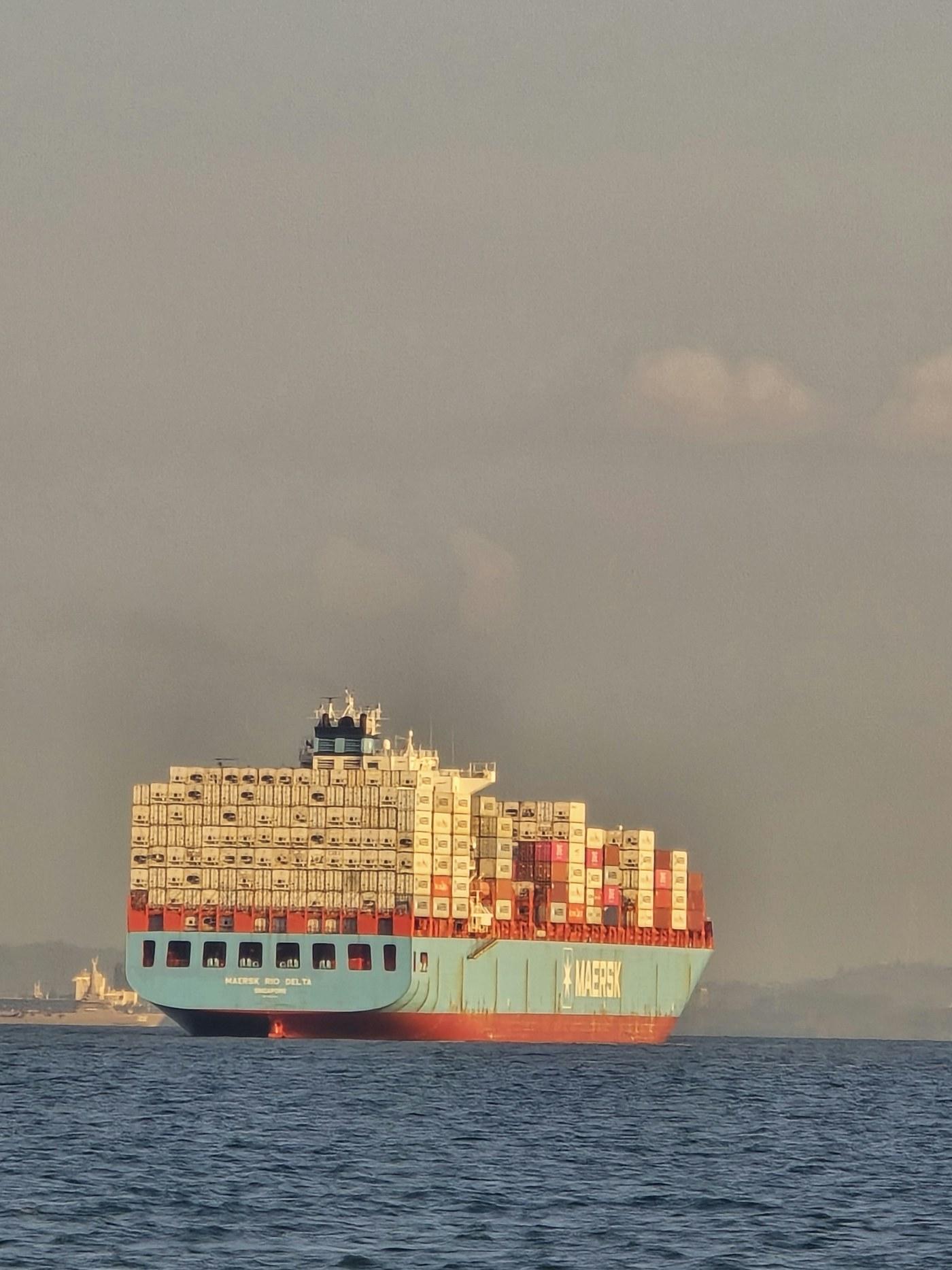
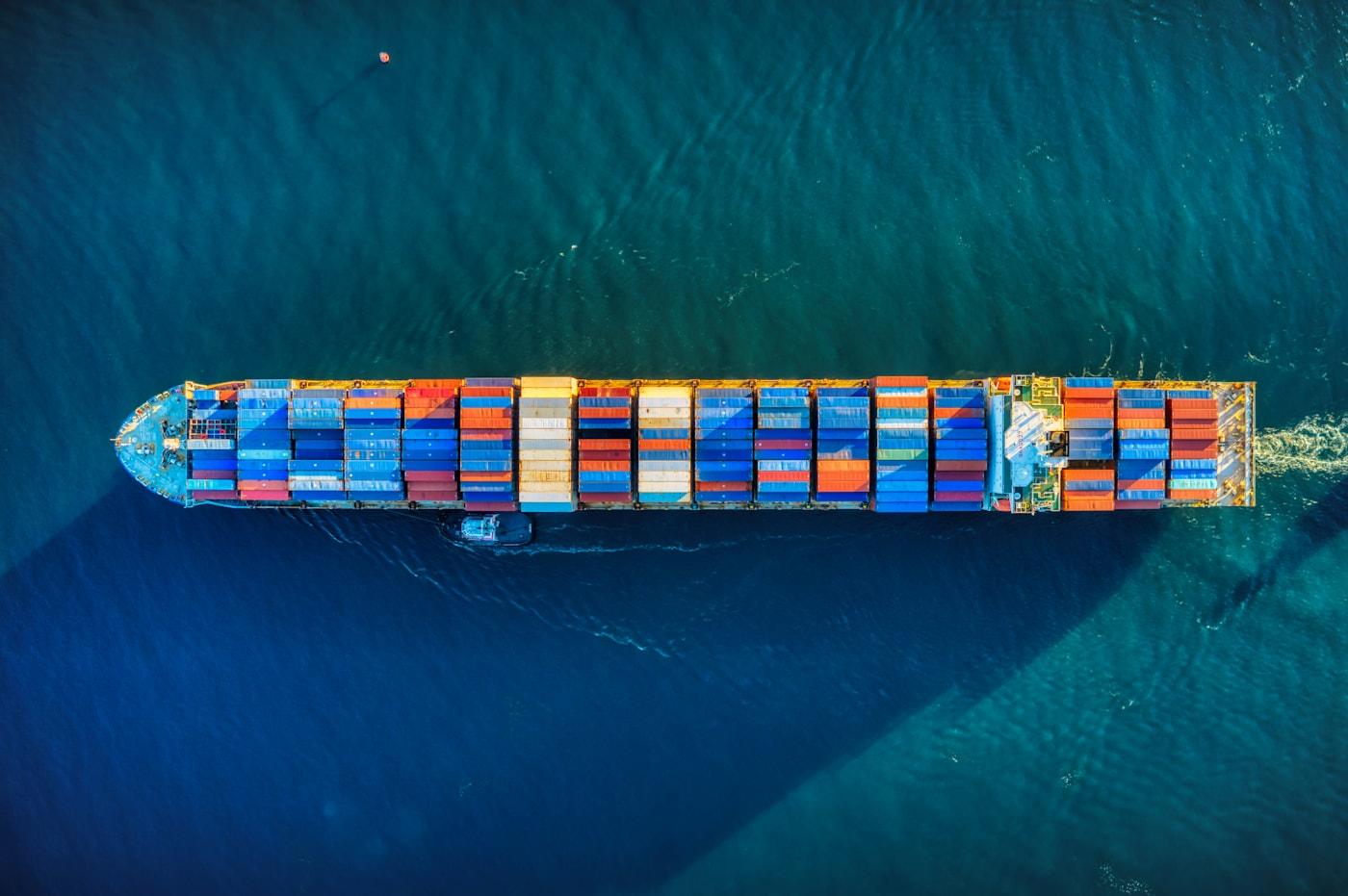
Luftaufnahme eines großen Containerschiffs auf See als Symbol für globale Schifffahrtsrouten unter geopolitischem Druck
01 / BRANCHEN-NEWS
Kernaussagen.
  • 01Containervolumen im Roten Meer liegt weiterhin ~65–75% unter dem Niveau vor der Krise; die meisten großen Reedereien routen Asien–Europa-Schleifen noch immer um das Kap
  • 02Der Umweg über das Kap der Guten Hoffnung fügt ~3.500 Seemeilen, 10–14 Tage Transit und 30–40% mehr Bunkerverbrauch pro Reise hinzu
  • 03Die Straße von Hormus transportiert 20–30% des seegebundenen Öls und ~25% des LNG; eine anhaltende Störung würde Brent um $20–40/bbl bewegen
  • 04Kriegsrisiko-Versicherungsprämien für Hochrisikopassagen liegen derzeit bei 0,5–1,5% des Schiffswertes — 5–10× der Basis vor 2023
  • 05China–Europe Railway Express hat sich als glaubwürdige 18–22 Tage Tür-zu-Tür-Alternative für Elektronik, Autoteile und zeitkritische Fracht etabliert

State of Play — A Region, Not an Incident

The freight market has moved from treating Middle East disruption as a series of discrete incidents to pricing it as a structural condition. Houthi-related Red Sea attacks since late 2023 have pushed container traffic through the Bab el-Mandeb strait down roughly 65–75% against 2022 baselines, per Clarksons Research. Israeli and Iranian kinetic exchanges through 2024 and into 2026, together with US naval activity in the Arabian Sea and escalation risk around the Strait of Hormuz, have added a second layer of risk on top of the Red Sea picture.

For shippers, the practical implication is simple: the Suez–Red Sea corridor can no longer be assumed to be the default Asia–Europe routing. Carriers have rebuilt their Asia–North Europe loops around the Cape of Good Hope, and most show no signal of a near-term return. Drewry's World Container Index for the week ending 17 April 2026 has Shanghai–Rotterdam at $3,180 per FEU — well above the 2019–2022 median — with Cape-routing costs now baked into contract and spot pricing.

Maritime Routing — The Cape Premium

The Cape of Good Hope route from Shanghai to Rotterdam measures roughly 14,700 nautical miles, against around 11,200 via Suez. At a service speed of 18–20 knots, that converts to an additional 10–14 days at sea. The operational cost impact stacks up across three buckets: bunker fuel (30–40% more consumed per round-trip), vessel-day charter cost, and slot productivity (fewer rotations per vessel per year, which tightens effective capacity).

Carriers have partially absorbed the cost through larger vessels, slow steaming, and redeployment from other trades, but the through-rate to shipper has moved. Shanghai Containerised Freight Index (SCFI) data for April 2026 shows Asia–North Europe rates between $2,900 and $3,300 per FEU, roughly 40–55% above pre-crisis levels on a structural basis. The Mediterranean has followed a similar pattern, with added premiums for Genoa and Barcelona.

Strait of Hormuz — The Tail Risk That Matters Most

The Strait of Hormuz is the single most concentrated energy chokepoint in seaborne trade. Roughly 20–30% of global seaborne oil and 25% of LNG flows transit the strait, with the majority of that volume moving to Asian buyers in China, Japan, South Korea, and India. The International Energy Agency's April 2026 oil market report flags Hormuz as the primary near-term tail risk to benchmark pricing.

A partial disruption — harassment of tankers, short closures, mine threats — would likely move Brent $20–40 per barrel and drive marine fuel costs up 15–25% within two weeks. A prolonged closure is a low-probability but high-severity scenario; neither side has a clear interest in sustained closure, but shippers should model the operational consequences. Practical preparation: diversify tanker suppliers, stress-test landed-cost models at $110–$130/bbl Brent, and confirm bunker supply contingency with your forwarder.

War Risk Insurance and the Joint War Committee

Marine war risk pricing has repriced materially. The Joint War Committee (a Lloyd's-convened body) now lists the southern Red Sea, Bab el-Mandeb, the Gulf of Aden, and parts of the Arabian Gulf as listed areas — requiring additional war risk premium (AP) on hull and machinery (H&M) cover for transit.

Indicative market levels for April 2026: AP on southern Red Sea transit is running 0.5–1.5% of hull value per voyage, depending on flag, operator track record, and route; pre-2023 it was typically 0.05–0.15%. For a standard 13,000 TEU vessel with a $160M hull value, this equates to $800,000 to $2.4M of added insurance cost per Red Sea transit. That cost is now embedded in carrier rate levels rather than charged as a line item to most shippers, but it shapes what carriers will quote and where they will sail.

Oil, Tankers, and Chemicals — Separate From Boxes

The container market and the tanker market have responded to Middle East risk asymmetrically. Crude and product tankers serving Chinese, Indian, and Asian refiners continue to transit the Hormuz–Malacca corridor with adjusted routing, military escorts, and higher war risk pricing. VLCC (Very Large Crude Carrier) rates for AG–East have run 30–50% above the 2019–2022 average through Q1 2026, per Clarksons tanker fixtures data.

LNG carriers serving Qatar–Asia volumes have maintained service through Hormuz; no operator has yet withdrawn. Chemical tankers have the most mixed picture, with some lanes shifting to Cape routing to avoid Red Sea, adding 14–16 days to India–Europe runs. For shippers of specialised commodities, engage your forwarder early on routing optionality: bonded transhipment at Jebel Ali, Salalah, or Port Klang can restore flexibility that direct-lane contracts no longer offer.

Alternatives — Rail, Air, and Routing Flex

China–Europe Railway Express services have absorbed a meaningful share of time-sensitive volume. Door-to-door transit from Shanghai, Chongqing, or Xi'an to Duisburg, Hamburg, Łódź, or Malaszewicze now runs 18–22 days — faster than Cape-routed sea and roughly a third of air cost per kg for dense cargo. China State Railway reports 19,200 rail freight departures in Q1 2026, up 12% year-on-year.

Air freight has firmed on the China–Europe lane as shippers of electronics, auto parts, and fashion SKUs rebalance mode mix. TAC Index Shanghai–Europe for April 2026 shows rates in the $4.20–$4.80/kg range, with capacity still constrained on the belly side. A 70/20/10 mix (sea/rail/air) is now a workable base case for mid-sized importers on the China–EU lane; six months ago most were 95% sea.

What Shippers Should Do Now

  • 01Assume Cape routing on Asia–Europe sea freight through at least Q3 2026; do not plan against a Suez reopening
  • 02Add 10–14 days buffer to China–Europe lead times versus 2022 baselines; reshape safety stock accordingly
  • 03Rebalance mode mix — move 10–20% of time-sensitive volume to China–Europe Railway Express where lane fit works
  • 04Stress-test landed cost at Brent $110–$130/bbl to pressure-test exposure to a Hormuz disruption scenario
  • 05Review Incoterms: DDP and CIF shift insurance and routing risk to the supplier or buyer — know where it sits today
  • 06Confirm with your forwarder that bonded transhipment via Jebel Ali, Salalah, or Port Klang is available on your lane for route flex

Looking Ahead

The base case through 2026 is continued structural avoidance of the Red Sea for container traffic, elevated but contained Hormuz risk, and war-risk premiums settling at a new, higher baseline rather than reverting. Carriers are locking in longer-term Cape network designs, port investments are flowing to Cape-aligned hubs (Port Elizabeth, Durban, and Las Palmas), and rail corridor expansion through Central Asia continues.

For operators and importers, the practical work is the same as it has been for twelve months: build the operating model around higher transit times, higher insurance, more modal options, and tighter communication with your forwarder. The freight market has adjusted. Shipper operating models need to adjust with it.

Häufig gestellte Fragen.

Q01
Wie hat der Nahostkonflikt den Containertransport 2026 beeinflusst?

Containertransporte durch das Rote Meer sind um rund 65–75% gegenüber dem Niveau vor der Krise zurückgegangen, wobei die meisten Asien–Europa-Dienste über das Kap der Guten Hoffnung geleitet werden. Dies fügt 10–14 Tage Transit und 30–40% Bunkerverbrauch pro Reise hinzu. SCFI Asien–Nordeuropa-Raten für April 2026 liegen bei $2.900–$3.300 pro FEU, 40–55% über dem Median 2019–2022.

Q02
Besteht das Risiko einer Sperrung der Straße von Hormus?

Eine vollständige Sperrung ist unwahrscheinlich, aber von hoher Tragweite. Die Straße transportiert 20–30% des globalen Seeöls und 25% des LNG, wobei der Großteil an asiatische Käufer geht. Eine Teilunterbrechung würde Brent voraussichtlich um $20–40/bbl bewegen. Die IEA nennt Hormus als das primäre kurzfristige Tail-Risiko in ihrem Ölmarktbericht vom April 2026.

Q03
Wie viel fügt der Umweg über das Kap der Guten Hoffnung zur Transitzeit und zu den Kosten hinzu?

Shanghai–Rotterdam über das Kap sind rund 14.700 Seemeilen gegenüber 11.200 über Suez, was bei 18–20 Knoten 10–14 Seetage hinzufügt. Der Bunkerverbrauch steigt um 30–40% pro Reise. Die effektive Kap-Prämie ist nun in Vertrags- und Spotraten eingepreist, wobei der Drewry WCI Shanghai–Rotterdam bei $3.180 pro FEU für die Woche zum 17. April 2026 liegt.

Q04
Wie hoch sind die Kriegsrisiko-Versicherungskosten für den Transit durch das Rote Meer?

Die zusätzliche Kriegsrisiko-Prämie auf Transitstrecken durch das Rote Meer und Bab el-Mandeb beträgt 0,5–1,5% des Schiffswertes pro Reise — 5–10× der Basis vor 2023. Für ein 13.000-TEU-Schiff mit einem Schiffswert von $160 Mio. entspricht dies $800.000 bis $2,4 Mio. zusätzlichen Versicherungskosten pro Transit, eingebettet in die Ratenniveaus der Reedereien und nicht separat den meisten Verladern in Rechnung gestellt.

Q05
Ist die China–Europa-Bahnverbindung eine praktikable Alternative zum Seefrachtverkehr?

Ja, für zeitkritische und hochwertige Fracht auf geeigneten Strecken. China–Europe Railway Express Tür-zu-Tür dauert derzeit 18–22 Tage gegenüber 45+ Tagen auf kap-gerouteten Seestrecken, zu etwa einem Drittel der Luftfrachtkosten pro Kilogramm für dichte Fracht. Die Bahnvolumen wuchsen im Q1 2026 um 12% gegenüber dem Vorjahr. Sprechen Sie mit Ihrem Spediteur über Inlandsursprungs-Optionen (Shanghai, Chongqing, Xi'an, Chengdu) und Zielterminals (Duisburg, Hamburg, Łódź, Malaszewicze).

  • [01]Clarksons Research — Container Intelligence Weekly
  • [02]Drewry World Container Index (WCI) — April 2026
  • [03]UNCTAD Review of Maritime Transport 2025
  • [04]Shanghai Containerised Freight Index (SCFI) — Shanghai Shipping Exchange
  • [05]Joint War Committee (Lloyd's) — listed areas bulletin
  • [06]IEA Oil Market Report — April 2026
Tyler Yang

Tyler leitet die Shenzhen-Operationen von SZViper mit über einem Jahrzehnt Speditionserfahrung auf den Routen Asien–Europa und Asien–Amerika.

Bereit zum Versenden?

Erhalten Sie ein kostenloses Angebot und erfahren Sie, wie Viper Supply Chain Ihre Lieferkette von China in die Welt optimieren kann.

Kostenloses Angebot Anfordern