Conflit au Moyen-Orient et transport maritime mondial : routes, tarifs et risques en 2026.

Les tensions régionales entre Israël, l'Iran et le Golfe ont reconfiguré les réseaux mondiaux de fret. L'évitement de la mer Rouge est désormais structurel, le risque dans le détroit d'Ormuz est accru, et les chargeurs font face à des transits plus longs, des assurances plus chères et des tarifs plus fermes. Voici l'état du marché et les mesures à prendre.

Tyler Yang
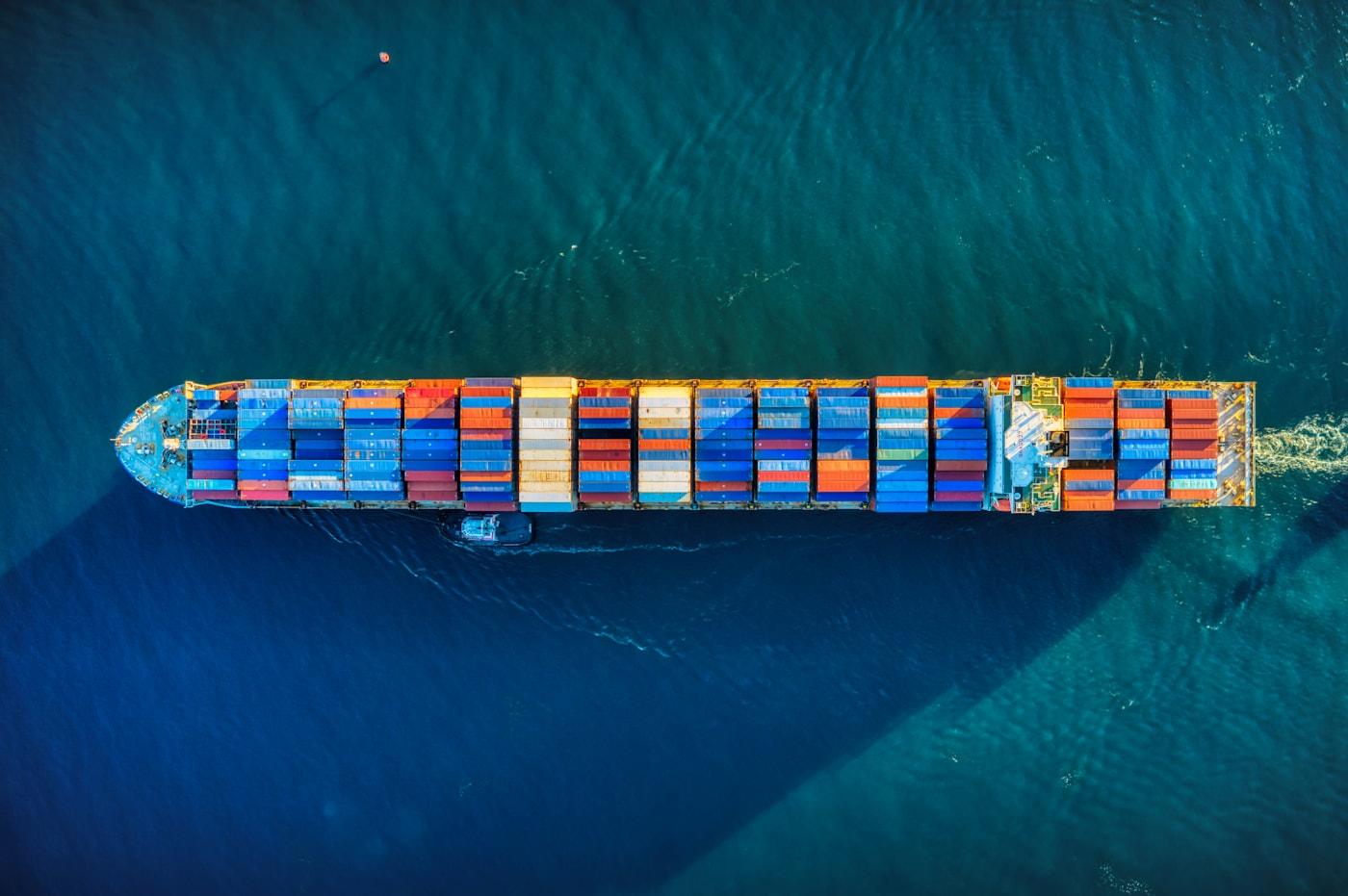
Vue aérienne d'un grand porte-conteneurs en mer représentant le routage maritime mondial sous pression géopolitique
01 / ACTUALITÉ DU SECTEUR
Points clés.
  • 01Les volumes de conteneurs en mer Rouge restent ~65–75% inférieurs aux niveaux d'avant-crise ; la plupart des grands armateurs maintiennent le routage Asie–Europe via le Cap
  • 02Le détour par le Cap de Bonne-Espérance ajoute ~3 500 milles nautiques, 10–14 jours de transit et 30–40% de consommation de soutes supplémentaire par voyage
  • 03Le détroit d'Ormuz transporte 20–30% du pétrole maritime et ~25% du LNG ; toute perturbation prolongée ferait bouger le Brent de $20–40/bbl
  • 04Les primes d'assurance risque de guerre sur les transits à risque élevé s'élèvent actuellement à 0,5–1,5% de la valeur de la coque — 5–10× la base d'avant 2023
  • 05China–Europe Railway Express s'est imposé comme une alternative crédible en 18–22 jours porte-à-porte pour l'électronique, les pièces automobiles et le fret urgent

State of Play — A Region, Not an Incident

The freight market has moved from treating Middle East disruption as a series of discrete incidents to pricing it as a structural condition. Houthi-related Red Sea attacks since late 2023 have pushed container traffic through the Bab el-Mandeb strait down roughly 65–75% against 2022 baselines, per Clarksons Research. Israeli and Iranian kinetic exchanges through 2024 and into 2026, together with US naval activity in the Arabian Sea and escalation risk around the Strait of Hormuz, have added a second layer of risk on top of the Red Sea picture.

For shippers, the practical implication is simple: the Suez–Red Sea corridor can no longer be assumed to be the default Asia–Europe routing. Carriers have rebuilt their Asia–North Europe loops around the Cape of Good Hope, and most show no signal of a near-term return. Drewry's World Container Index for the week ending 17 April 2026 has Shanghai–Rotterdam at $3,180 per FEU — well above the 2019–2022 median — with Cape-routing costs now baked into contract and spot pricing.

Maritime Routing — The Cape Premium

The Cape of Good Hope route from Shanghai to Rotterdam measures roughly 14,700 nautical miles, against around 11,200 via Suez. At a service speed of 18–20 knots, that converts to an additional 10–14 days at sea. The operational cost impact stacks up across three buckets: bunker fuel (30–40% more consumed per round-trip), vessel-day charter cost, and slot productivity (fewer rotations per vessel per year, which tightens effective capacity).

Carriers have partially absorbed the cost through larger vessels, slow steaming, and redeployment from other trades, but the through-rate to shipper has moved. Shanghai Containerised Freight Index (SCFI) data for April 2026 shows Asia–North Europe rates between $2,900 and $3,300 per FEU, roughly 40–55% above pre-crisis levels on a structural basis. The Mediterranean has followed a similar pattern, with added premiums for Genoa and Barcelona.

Strait of Hormuz — The Tail Risk That Matters Most

The Strait of Hormuz is the single most concentrated energy chokepoint in seaborne trade. Roughly 20–30% of global seaborne oil and 25% of LNG flows transit the strait, with the majority of that volume moving to Asian buyers in China, Japan, South Korea, and India. The International Energy Agency's April 2026 oil market report flags Hormuz as the primary near-term tail risk to benchmark pricing.

A partial disruption — harassment of tankers, short closures, mine threats — would likely move Brent $20–40 per barrel and drive marine fuel costs up 15–25% within two weeks. A prolonged closure is a low-probability but high-severity scenario; neither side has a clear interest in sustained closure, but shippers should model the operational consequences. Practical preparation: diversify tanker suppliers, stress-test landed-cost models at $110–$130/bbl Brent, and confirm bunker supply contingency with your forwarder.

War Risk Insurance and the Joint War Committee

Marine war risk pricing has repriced materially. The Joint War Committee (a Lloyd's-convened body) now lists the southern Red Sea, Bab el-Mandeb, the Gulf of Aden, and parts of the Arabian Gulf as listed areas — requiring additional war risk premium (AP) on hull and machinery (H&M) cover for transit.

Indicative market levels for April 2026: AP on southern Red Sea transit is running 0.5–1.5% of hull value per voyage, depending on flag, operator track record, and route; pre-2023 it was typically 0.05–0.15%. For a standard 13,000 TEU vessel with a $160M hull value, this equates to $800,000 to $2.4M of added insurance cost per Red Sea transit. That cost is now embedded in carrier rate levels rather than charged as a line item to most shippers, but it shapes what carriers will quote and where they will sail.

Oil, Tankers, and Chemicals — Separate From Boxes

The container market and the tanker market have responded to Middle East risk asymmetrically. Crude and product tankers serving Chinese, Indian, and Asian refiners continue to transit the Hormuz–Malacca corridor with adjusted routing, military escorts, and higher war risk pricing. VLCC (Very Large Crude Carrier) rates for AG–East have run 30–50% above the 2019–2022 average through Q1 2026, per Clarksons tanker fixtures data.

LNG carriers serving Qatar–Asia volumes have maintained service through Hormuz; no operator has yet withdrawn. Chemical tankers have the most mixed picture, with some lanes shifting to Cape routing to avoid Red Sea, adding 14–16 days to India–Europe runs. For shippers of specialised commodities, engage your forwarder early on routing optionality: bonded transhipment at Jebel Ali, Salalah, or Port Klang can restore flexibility that direct-lane contracts no longer offer.

Alternatives — Rail, Air, and Routing Flex

China–Europe Railway Express services have absorbed a meaningful share of time-sensitive volume. Door-to-door transit from Shanghai, Chongqing, or Xi'an to Duisburg, Hamburg, Łódź, or Malaszewicze now runs 18–22 days — faster than Cape-routed sea and roughly a third of air cost per kg for dense cargo. China State Railway reports 19,200 rail freight departures in Q1 2026, up 12% year-on-year.

Air freight has firmed on the China–Europe lane as shippers of electronics, auto parts, and fashion SKUs rebalance mode mix. TAC Index Shanghai–Europe for April 2026 shows rates in the $4.20–$4.80/kg range, with capacity still constrained on the belly side. A 70/20/10 mix (sea/rail/air) is now a workable base case for mid-sized importers on the China–EU lane; six months ago most were 95% sea.

What Shippers Should Do Now

  • 01Assume Cape routing on Asia–Europe sea freight through at least Q3 2026; do not plan against a Suez reopening
  • 02Add 10–14 days buffer to China–Europe lead times versus 2022 baselines; reshape safety stock accordingly
  • 03Rebalance mode mix — move 10–20% of time-sensitive volume to China–Europe Railway Express where lane fit works
  • 04Stress-test landed cost at Brent $110–$130/bbl to pressure-test exposure to a Hormuz disruption scenario
  • 05Review Incoterms: DDP and CIF shift insurance and routing risk to the supplier or buyer — know where it sits today
  • 06Confirm with your forwarder that bonded transhipment via Jebel Ali, Salalah, or Port Klang is available on your lane for route flex

Looking Ahead

The base case through 2026 is continued structural avoidance of the Red Sea for container traffic, elevated but contained Hormuz risk, and war-risk premiums settling at a new, higher baseline rather than reverting. Carriers are locking in longer-term Cape network designs, port investments are flowing to Cape-aligned hubs (Port Elizabeth, Durban, and Las Palmas), and rail corridor expansion through Central Asia continues.

For operators and importers, the practical work is the same as it has been for twelve months: build the operating model around higher transit times, higher insurance, more modal options, and tighter communication with your forwarder. The freight market has adjusted. Shipper operating models need to adjust with it.

Questions fréquentes.

Q01
Comment le conflit au Moyen-Orient a-t-il affecté le transport de conteneurs en 2026 ?

Les transits de conteneurs en mer Rouge ont chuté d'environ 65–75% par rapport aux niveaux d'avant-crise, la plupart des services Asie–Europe étant désormais routés via le Cap de Bonne-Espérance. Cela ajoute 10–14 jours de transit et 30–40% de consommation de soutes par voyage. Les tarifs SCFI Asie–Europe du Nord pour avril 2026 s'établissent à $2 900–$3 300 par FEU, soit 40–55% au-dessus de la médiane 2019–2022.

Q02
Le détroit d'Ormuz risque-t-il d'être fermé ?

Une fermeture totale est peu probable mais de haute gravité. Le détroit transporte 20–30% du pétrole maritime mondial et 25% du LNG, l'essentiel des volumes allant vers les acheteurs asiatiques. Une perturbation partielle ferait probablement bouger le Brent de $20–40/bbl. L'IEA identifie Ormuz comme le principal risque extrême à court terme dans son rapport de marché pétrolier d'avril 2026.

Q03
De combien le détour par le Cap de Bonne-Espérance augmente-t-il le temps de transit et les coûts ?

Shanghai–Rotterdam via le Cap représente environ 14 700 milles nautiques contre 11 200 via Suez, ajoutant 10–14 jours en mer à 18–20 nœuds. La consommation de soutes augmente de 30–40% par voyage. La prime effective du Cap est désormais intégrée dans les tarifs contractuels et spot, le WCI Drewry Shanghai–Rotterdam s'établissant à $3 180 par FEU pour la semaine du 17 avril 2026.

Q04
Quel est le coût de l'assurance risque de guerre pour le transit en mer Rouge ?

La prime de risque de guerre supplémentaire sur les transits en mer Rouge et par Bab el-Mandeb s'élève à 0,5–1,5% de la valeur de la coque par voyage — 5–10× la base d'avant 2023. Pour un navire de 13 000 TEU avec une valeur de coque de $160 M, cela représente $800 000 à $2,4 M de coût d'assurance supplémentaire par transit, intégré dans les niveaux tarifaires des armateurs et non facturé séparément à la plupart des chargeurs.

Q05
Le fret ferroviaire Chine–Europe est-il une alternative viable au fret maritime ?

Oui, pour les marchandises urgentes et à haute valeur sur les lignes adaptées. China–Europe Railway Express porte-à-porte effectue actuellement 18–22 jours contre 45+ jours via les routes maritimes via le Cap, à environ un tiers du coût du fret aérien par kilogramme pour les marchandises denses. Les volumes ferroviaires ont progressé de 12% en glissement annuel au T1 2026. Consultez votre transitaire pour les options d'origine intérieure (Shanghai, Chongqing, Xi'an, Chengdu) et les terminaux de destination (Duisbourg, Hambourg, Łódź, Malaszewicze).

  • [01]Clarksons Research — Container Intelligence Weekly
  • [02]Drewry World Container Index (WCI) — April 2026
  • [03]UNCTAD Review of Maritime Transport 2025
  • [04]Shanghai Containerised Freight Index (SCFI) — Shanghai Shipping Exchange
  • [05]Joint War Committee (Lloyd's) — listed areas bulletin
  • [06]IEA Oil Market Report — April 2026
Tyler Yang

Tyler dirige les opérations de SZViper à Shenzhen avec plus d'une décennie d'expérience en transit sur les axes commerciaux Asie–Europe et Asie–Amériques.

Prêt à Expédier ?

Obtenez un devis gratuit et découvrez comment Viper Supply Chain peut optimiser votre chaîne d'approvisionnement de la Chine vers le monde.

Demander un Devis Gratuit