中东局势与全球航运:2026 年的路线、运价与风险.

以色列、伊朗及更广泛海湾地区的地区紧张局势已重塑全球货运网络。绕行红海已成结构性常态,霍尔木兹海峡风险上升,托运人面临更长的运输时间、更高的保险费用和更坚挺的运价。以下是市场现状及应对建议。

Tyler Yang
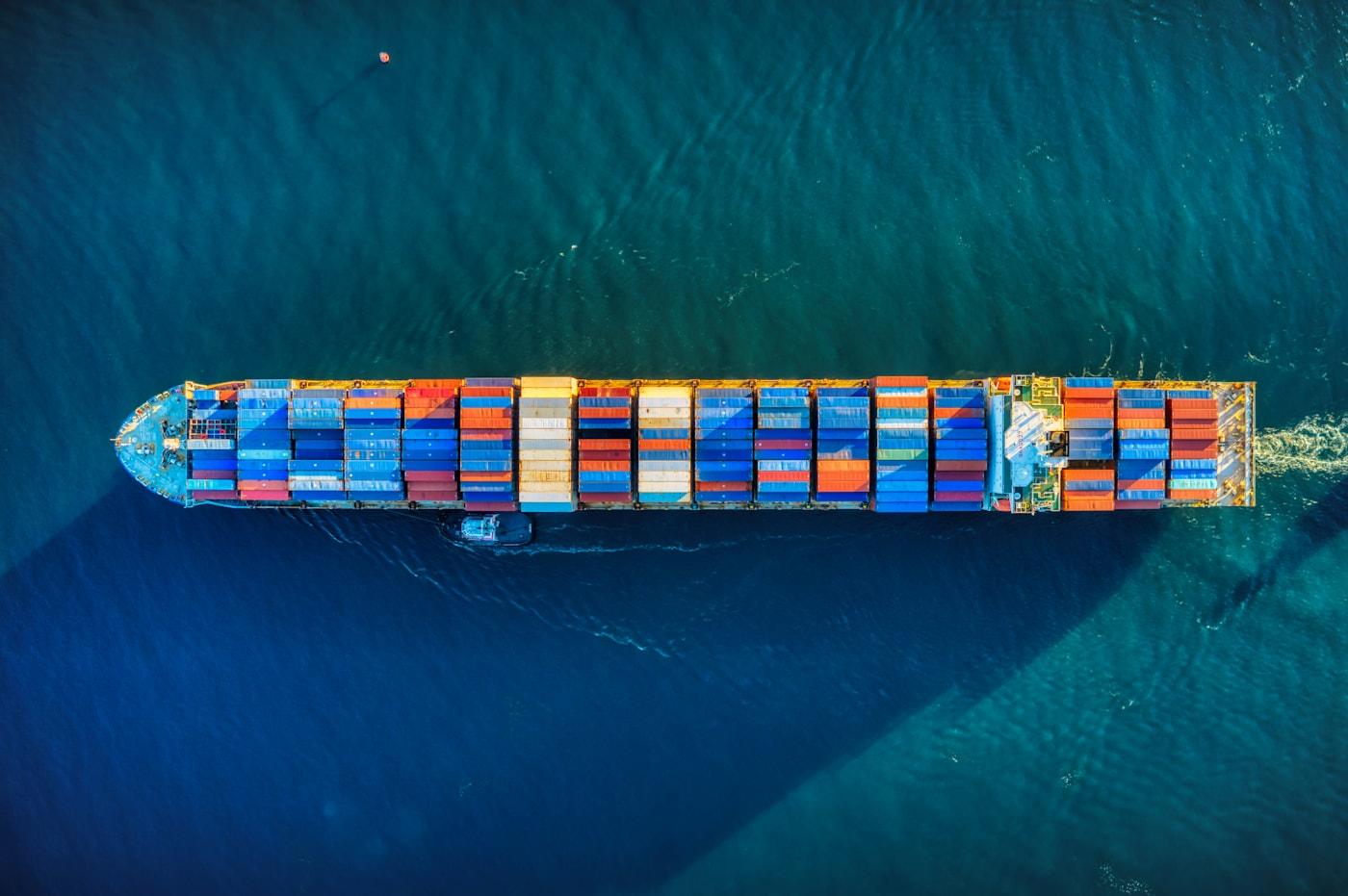
一艘大型集装箱船在海上的鸟瞰图,象征全球航运在地缘政治压力下的路线规划
01 / 行业新闻
关键要点
  • 01红海集装箱运量仍较危机前水平低约 65–75%;大多数主要班轮公司的亚欧航线仍经好望角绕行
  • 02绕行好望角新增约 3,500 海里航程、10–14 天运输时间,每航次燃油消耗增加 30–40%
  • 03霍尔木兹海峡承载全球约 20–30% 的海运石油及约 25% 的 LNG;任何持续性干扰将推动 Brent 原油价格上涨 $20–40/bbl
  • 04高风险过境航线的战争险保费目前为船体价值的 0.5–1.5%,是 2023 年前基准的 5–10 倍
  • 05中欧班列已成为电子产品、汽车零部件及时效敏感货物的可靠替代方案,门到门仅需 18–22 天

State of Play — A Region, Not an Incident

The freight market has moved from treating Middle East disruption as a series of discrete incidents to pricing it as a structural condition. Houthi-related Red Sea attacks since late 2023 have pushed container traffic through the Bab el-Mandeb strait down roughly 65–75% against 2022 baselines, per Clarksons Research. Israeli and Iranian kinetic exchanges through 2024 and into 2026, together with US naval activity in the Arabian Sea and escalation risk around the Strait of Hormuz, have added a second layer of risk on top of the Red Sea picture.

For shippers, the practical implication is simple: the Suez–Red Sea corridor can no longer be assumed to be the default Asia–Europe routing. Carriers have rebuilt their Asia–North Europe loops around the Cape of Good Hope, and most show no signal of a near-term return. Drewry's World Container Index for the week ending 17 April 2026 has Shanghai–Rotterdam at $3,180 per FEU — well above the 2019–2022 median — with Cape-routing costs now baked into contract and spot pricing.

Maritime Routing — The Cape Premium

The Cape of Good Hope route from Shanghai to Rotterdam measures roughly 14,700 nautical miles, against around 11,200 via Suez. At a service speed of 18–20 knots, that converts to an additional 10–14 days at sea. The operational cost impact stacks up across three buckets: bunker fuel (30–40% more consumed per round-trip), vessel-day charter cost, and slot productivity (fewer rotations per vessel per year, which tightens effective capacity).

Carriers have partially absorbed the cost through larger vessels, slow steaming, and redeployment from other trades, but the through-rate to shipper has moved. Shanghai Containerised Freight Index (SCFI) data for April 2026 shows Asia–North Europe rates between $2,900 and $3,300 per FEU, roughly 40–55% above pre-crisis levels on a structural basis. The Mediterranean has followed a similar pattern, with added premiums for Genoa and Barcelona.

Strait of Hormuz — The Tail Risk That Matters Most

The Strait of Hormuz is the single most concentrated energy chokepoint in seaborne trade. Roughly 20–30% of global seaborne oil and 25% of LNG flows transit the strait, with the majority of that volume moving to Asian buyers in China, Japan, South Korea, and India. The International Energy Agency's April 2026 oil market report flags Hormuz as the primary near-term tail risk to benchmark pricing.

A partial disruption — harassment of tankers, short closures, mine threats — would likely move Brent $20–40 per barrel and drive marine fuel costs up 15–25% within two weeks. A prolonged closure is a low-probability but high-severity scenario; neither side has a clear interest in sustained closure, but shippers should model the operational consequences. Practical preparation: diversify tanker suppliers, stress-test landed-cost models at $110–$130/bbl Brent, and confirm bunker supply contingency with your forwarder.

War Risk Insurance and the Joint War Committee

Marine war risk pricing has repriced materially. The Joint War Committee (a Lloyd's-convened body) now lists the southern Red Sea, Bab el-Mandeb, the Gulf of Aden, and parts of the Arabian Gulf as listed areas — requiring additional war risk premium (AP) on hull and machinery (H&M) cover for transit.

Indicative market levels for April 2026: AP on southern Red Sea transit is running 0.5–1.5% of hull value per voyage, depending on flag, operator track record, and route; pre-2023 it was typically 0.05–0.15%. For a standard 13,000 TEU vessel with a $160M hull value, this equates to $800,000 to $2.4M of added insurance cost per Red Sea transit. That cost is now embedded in carrier rate levels rather than charged as a line item to most shippers, but it shapes what carriers will quote and where they will sail.

Oil, Tankers, and Chemicals — Separate From Boxes

The container market and the tanker market have responded to Middle East risk asymmetrically. Crude and product tankers serving Chinese, Indian, and Asian refiners continue to transit the Hormuz–Malacca corridor with adjusted routing, military escorts, and higher war risk pricing. VLCC (Very Large Crude Carrier) rates for AG–East have run 30–50% above the 2019–2022 average through Q1 2026, per Clarksons tanker fixtures data.

LNG carriers serving Qatar–Asia volumes have maintained service through Hormuz; no operator has yet withdrawn. Chemical tankers have the most mixed picture, with some lanes shifting to Cape routing to avoid Red Sea, adding 14–16 days to India–Europe runs. For shippers of specialised commodities, engage your forwarder early on routing optionality: bonded transhipment at Jebel Ali, Salalah, or Port Klang can restore flexibility that direct-lane contracts no longer offer.

Alternatives — Rail, Air, and Routing Flex

China–Europe Railway Express services have absorbed a meaningful share of time-sensitive volume. Door-to-door transit from Shanghai, Chongqing, or Xi'an to Duisburg, Hamburg, Łódź, or Malaszewicze now runs 18–22 days — faster than Cape-routed sea and roughly a third of air cost per kg for dense cargo. China State Railway reports 19,200 rail freight departures in Q1 2026, up 12% year-on-year.

Air freight has firmed on the China–Europe lane as shippers of electronics, auto parts, and fashion SKUs rebalance mode mix. TAC Index Shanghai–Europe for April 2026 shows rates in the $4.20–$4.80/kg range, with capacity still constrained on the belly side. A 70/20/10 mix (sea/rail/air) is now a workable base case for mid-sized importers on the China–EU lane; six months ago most were 95% sea.

What Shippers Should Do Now

  • 01Assume Cape routing on Asia–Europe sea freight through at least Q3 2026; do not plan against a Suez reopening
  • 02Add 10–14 days buffer to China–Europe lead times versus 2022 baselines; reshape safety stock accordingly
  • 03Rebalance mode mix — move 10–20% of time-sensitive volume to China–Europe Railway Express where lane fit works
  • 04Stress-test landed cost at Brent $110–$130/bbl to pressure-test exposure to a Hormuz disruption scenario
  • 05Review Incoterms: DDP and CIF shift insurance and routing risk to the supplier or buyer — know where it sits today
  • 06Confirm with your forwarder that bonded transhipment via Jebel Ali, Salalah, or Port Klang is available on your lane for route flex

Looking Ahead

The base case through 2026 is continued structural avoidance of the Red Sea for container traffic, elevated but contained Hormuz risk, and war-risk premiums settling at a new, higher baseline rather than reverting. Carriers are locking in longer-term Cape network designs, port investments are flowing to Cape-aligned hubs (Port Elizabeth, Durban, and Las Palmas), and rail corridor expansion through Central Asia continues.

For operators and importers, the practical work is the same as it has been for twelve months: build the operating model around higher transit times, higher insurance, more modal options, and tighter communication with your forwarder. The freight market has adjusted. Shipper operating models need to adjust with it.

常见问题

Q01
中东冲突对 2026 年集装箱运输有何影响?

红海集装箱过境量较危机前水平下降约 65–75%,大多数亚欧航线已改道好望角。这为每航次增加了 10–14 天运输时间和 30–40% 的燃油消耗。2026 年 4 月 SCFI 亚洲至北欧运价为每 FEU $2,900–$3,300,较 2019–2022 年中位数高出 40–55%。

Q02
霍尔木兹海峡是否面临关闭风险?

完全封锁的概率较低,但影响极为严重。该海峡承载全球 20–30% 的海运石油和 25% 的 LNG,大部分运往亚洲买家。局部中断预计将推动 Brent 原油价格上涨 $20–40/bbl。IEA 在其 2026 年 4 月石油市场报告中将霍尔木兹列为近期首要尾部风险。

Q03
绕行好望角会为运输时间和成本增加多少?

上海至鹿特丹经好望角约 14,700 海里,经苏伊士约 11,200 海里,以 18–20 节航速计增加约 10–14 天航行时间。每航次燃油消耗增加 30–40%。好望角附加成本已计入合同运价和即期运价,Drewry WCI 上海至鹿特丹在 2026 年 4 月 17 日当周报价为每 FEU $3,180。

Q04
红海过境的战争险费用是多少?

红海及曼德海峡过境的额外战争险保费目前为每航次船体价值的 0.5–1.5%,是 2023 年前基准的 5–10 倍。对于船体价值 $1.6 亿的 13,000 TEU 船舶,每次过境额外保险成本达 $80 万至 $240 万,已计入班轮公司运价水平,通常不单独向托运人收费。

Q05
中欧班列能否成为海运的可行替代方案?

对于适合线路上的时效性强、高附加值货物,答案是肯定的。中欧班列目前门到门仅需 18–22 天,而经好望角的海运需要 45 天以上;对于高密度货物,运费约为空运的三分之一。2026 年 Q1 铁路货运量同比增长 12%。请向货代咨询内陆起运地选项(上海、重庆、西安、成都)及目的地场站(杜伊斯堡、汉堡、罗兹、马沙舍维切)。

  • [01]Clarksons Research — Container Intelligence Weekly
  • [02]Drewry World Container Index (WCI) — April 2026
  • [03]UNCTAD Review of Maritime Transport 2025
  • [04]Shanghai Containerised Freight Index (SCFI) — Shanghai Shipping Exchange
  • [05]Joint War Committee (Lloyd's) — listed areas bulletin
  • [06]IEA Oil Market Report — April 2026
Tyler Yang

Tyler 负责 SZViper 深圳业务,在亚欧及亚美贸易航线上拥有十多年的货运代理经验。

准备发货了吗?

获取免费报价,了解 Viper Supply Chain 如何优化您从中国到世界的供应链。

立即获取免费报价